
Case studies · Buildings + Facilities
One living source of truth for a council building portfolio
LGA Council, WA
- 2025unit rates, escalated to each renewal year, replacing 2015-era pricing
- 20-yearforward works programme, auditable per component
- Secondsto filter, group and drill from portfolio to room to component
The challenge
The council's asset management practice, like most local governments, was built on documents that went stale the moment they were printed.
The council's building condition data lived in Excel workbooks with 2015-era pricing, updated only when a consultant walked the site and produced a fresh PDF, typically every five to seven years. Between reports, nobody had a current view of what the council owned, what condition it was in, what it would cost to renew, and when that renewal would fall due.
The practical consequences were familiar to every asset manager in local government:
“I don't know what we own.” The asset register was a spreadsheet, not a system. Filtering by building, room, component type, or condition grade meant manual cross-referencing across multiple tabs and files.
“I don't know what condition it's in.” The most recent condition assessment was a 2019 PDF. Components had degraded since then, but the record hadn't.
“I can't tell you what it will cost to fix.” Unit rates were from 2015. Inflation, supply chain shifts, and labour cost growth made every figure in the register unreliable by the time it reached a budget meeting.
“I can't show you when things will fail.” Renewal timing was a best guess, not a model. There was no defensible 20-year forward works programme.
“I can't model the trade-offs.” When council asked "what happens if we defer renewal by two years?" or "what does a 3% inflation assumption do to the backlog?", the answer required rebuilding a spreadsheet from scratch.
The council needed more than a refreshed report. They needed a system that held live condition data, calculated costs on a current basis, projected renewal timing, and let them model funding scenarios, all backed by evidence a ratepayer or auditor could trace back to a photo of the actual component.
The solution
AssetStack was deployed as the council's central asset intelligence platform. The engagement covered the full lifecycle: ingesting the existing register, re-baselining condition and cost data to 2025, capturing visual evidence, and standing up the forward works programme and funding models.
One register, one source of truth
The council's existing asset register, thousands of rows across multiple spreadsheets, was ingested into AssetStack's structured database. Each component became a queryable record with its building, room, component type, quantity, unit, condition grade, criticality, and level of service attached.
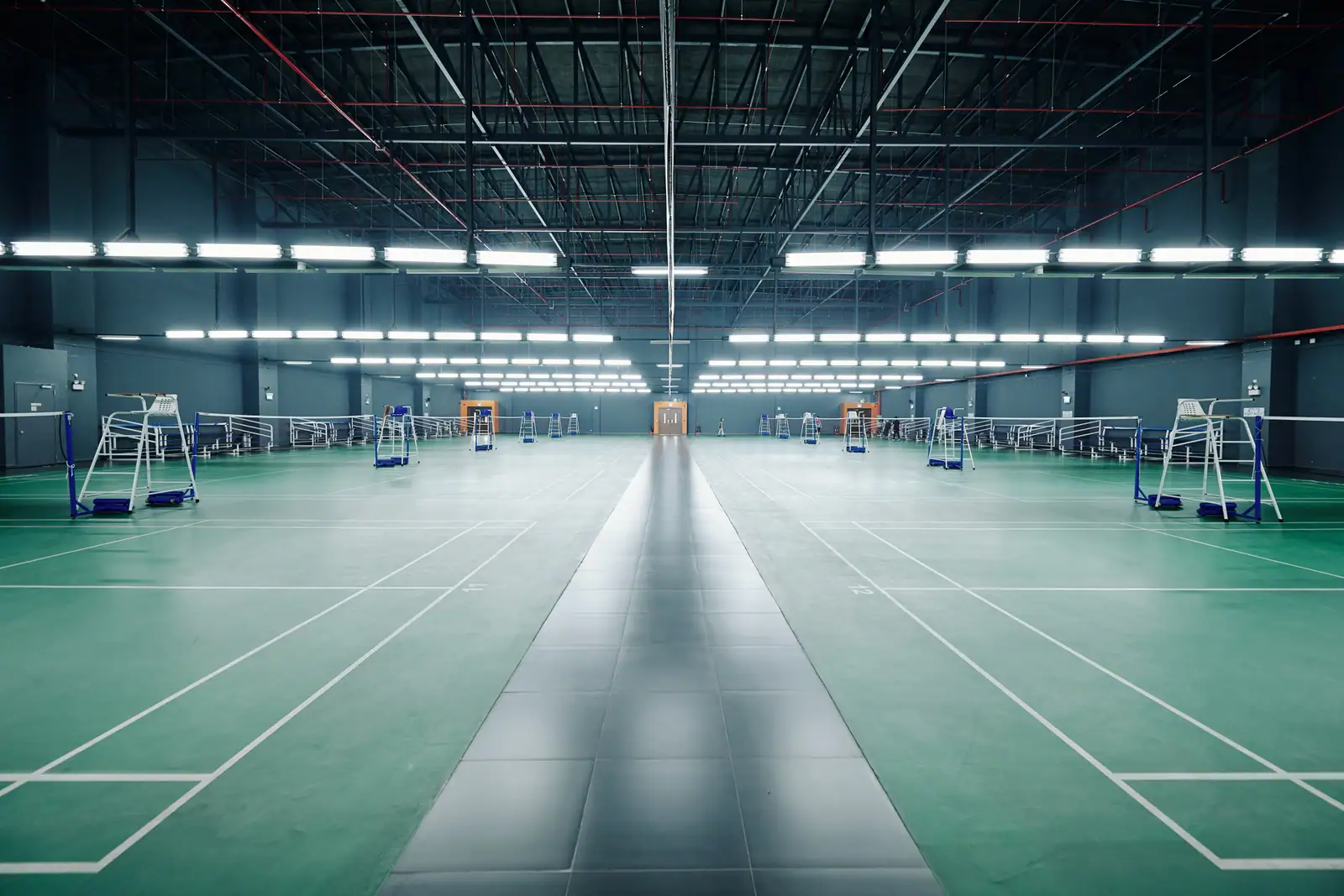
The register is no longer a file someone maintains. It's a live database the whole team works from. A facilities manager can filter to "every Air Con component in Poor condition across the regional sports centre" in two clicks, and the result is the truth, not a stale export.
Condition data that doesn't go stale
AssetStack replaced the five-yearly consultant PDF with a continuous condition assessment workflow. Components are graded on the standard 1 to 5 scale (Very Good through Failed), and grades are tied to photographic evidence captured on site.
Where Matterport digital twins or 360° panoramas are available, the platform's AI-assisted detection cross-references captured imagery against the master asset list, surfacing components, suggesting condition grades, and flagging discrepancies for human review. The assessor confirms or corrects; the system learns.
The result: condition data that reflects the building as it is today, not as it was when a consultant last walked through.
Costs on a 2025 basis, and projected forward
Every unit rate in the register was re-baselined to 2025. Replacement costs are calculated as quantity × current unit rate. The platform then escalates each component's replacement cost forward to its projected renewal year using a configurable inflation rate, so the 20-year programme reflects future dollars, not historical ones.
This single change closed the gap between what the register said and what the budget actually required. Figures that once arrived at council meetings already out of date now arrive current and defensible.
A defensible 20-year Forward Works Programme
AssetStack calculates a renewal year for every component using a transparent, auditable model:
- Remaining life is derived from the condition grade via a lookup table.
- Adjustment factor is applied from a Level of Service × Criticality matrix: a component in a high-service, high-criticality room is renewed sooner than the same component in a low-service space.
- Replacement year is calculated as the base year plus adjusted remaining life.
- Escalated cost applies the inflation assumption to the renewal year.
- The output is a year-by-year programme every component falls into, with the total cost per year, per building, per component group, and per room, all drillable, all exportable. When someone asks "why is the HVAC renewal in 2031?", the answer traces back through the model to the condition grade, the criticality, the unit rate, and the photo.
Funding scenarios, not just a single forecast
The Scenario Modeller lets the council test funding and assumption changes against the programme:
- Annual budget: what gets funded if we cap spend at $X per year?
- Inflation rate: what does 3% vs 5% do to the 10-year backlog?
- Deferral rate: what's the cost of pushing renewal out by two years?
- Climate stress: how does accelerated degradation shift the curve?
- Scenarios are saved, compared side by side, and pinned for board reporting. The question "what happens if we defer" now has a quantified answer with a backlog delta, not a shrug.
Defects with cascade prediction
Condition grades capture the slow decline; the Defect Backlog captures the things that are broken now. Each defect carries an urgency, a response year, and a cost, and the platform's cascade prediction models how an unaddressed defect in one component accelerates degradation in connected components. A leaking roof membrane isn't just a roof problem; it's a ceiling, a wall, and a floor problem downstream.
AssetMind, the natural-language copilot
The council's AssetMind assistant lets staff ask questions in plain English: "What's the total replacement cost of all Air Con assets at the regional sports centre in Fair or worse condition?" or "Which rooms at the civic administration building have components due for renewal before 2029?" The assistant queries the live database and returns the answer with the supporting records. It turns a database into a colleague.
Board-ready, audit-ready reporting
Every figure on the dashboard traces back to source. A condition grade links to a photo. A cost links to a unit rate and a quantity. A renewal year links to a condition grade, a criticality, and a level of service. The council can walk into a budget meeting, a council meeting, or an audit with a report where every number has a provenance chain.
The results
| Before AssetStack | After AssetStack |
|---|---|
| 2015-era spreadsheet pricing | 2025 unit rates, escalated to each renewal year |
| 2019 PDF condition report | Continuous condition data tied to photographic evidence |
| Manual cross-referencing to answer portfolio questions | Filter, group, and drill from portfolio to room to component in seconds |
| Best-guess renewal timing | Modelled 20-year forward works programme, auditable per component |
| Single static forecast | Saved, comparable funding scenarios with backlog deltas |
| Defects tracked in isolation | Defect backlog with cascade prediction across connected components |
| "Let me get back to you on that" | Ask AssetMind, get the answer from live data |
| Report that's out of date before it's printed | Dashboard that reflects the portfolio today |
What's next
The platform is live and in continuous use. The next phase of the engagement focuses on:
Expanding digital twin coverage to additional civic buildings using the panorama ingestion pipeline, reducing the cost of visual capture relative to full Matterport scans.
Deepening predictive maintenance, moving from condition-grade-based renewal modelling toward sensor-informed failure prediction on critical mechanical plant.
Extending scenario modelling into climate-stress-adjusted lifecycle planning as climate exposure data is incorporated.
Broadening the AssetMind knowledge base as more assessment cycles accumulate, so the assistant's answers improve with every component graded.
Why it matters
The council didn't buy software. They replaced a reporting cycle with a system of record, one that holds what they own, what condition it's in, what it will cost, and when it will fail, all on a current basis, all backed by evidence, all queryable by the people who need the answers.
Get in touch
Book a working demo.
Tell us about your portfolio. We'll run a tailored session. No platform access until you're ready.
Thanks.
We'll be in touch within one business day.